
The Part of Your Wedding Film Nobody Talks About (And Why It Makes or Breaks Everything)
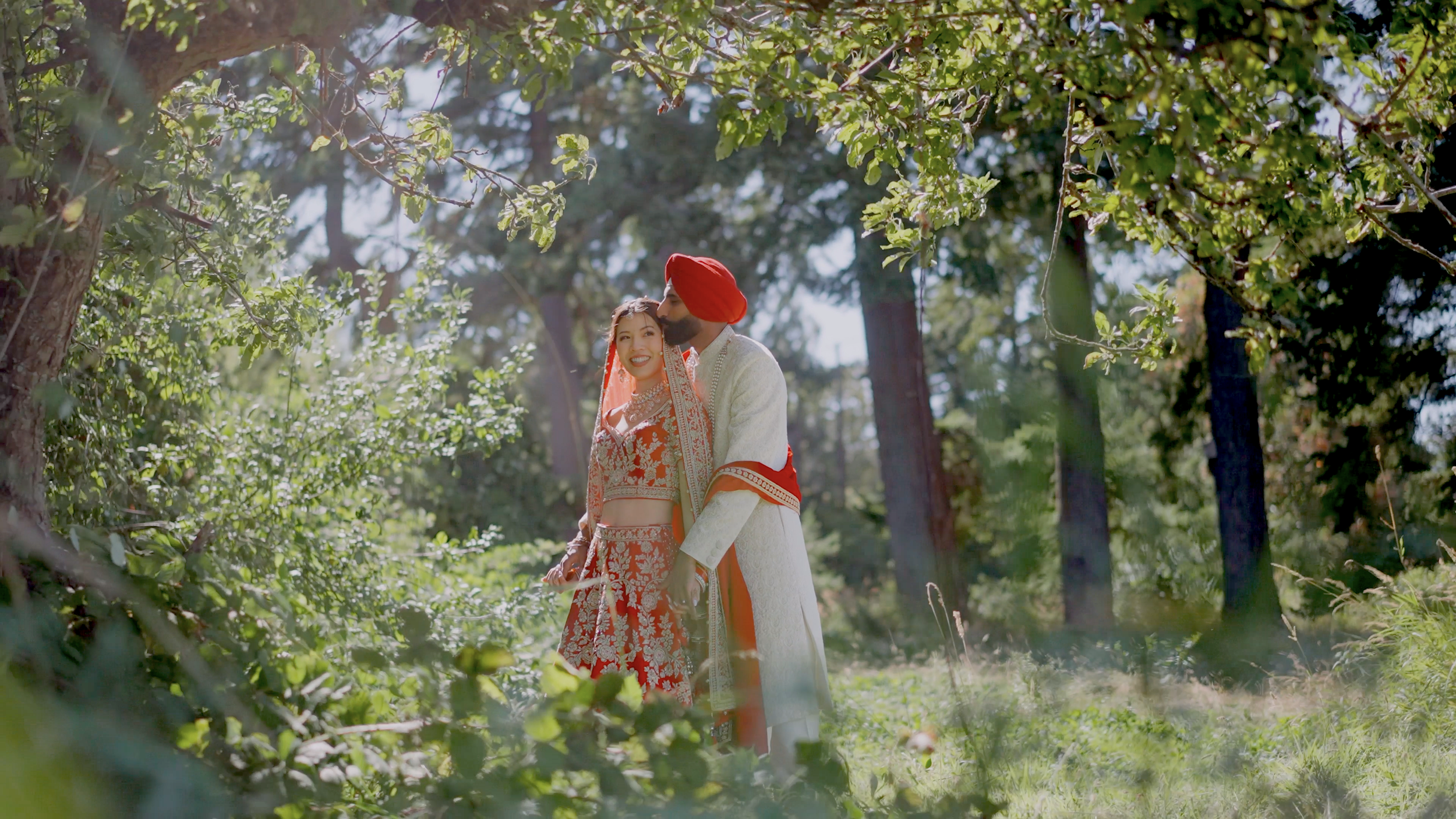
The audio in your wedding film matters more than the image quality. A beautifully shot film with poor sound is harder to watch — and harder to feel — than rough footage with great audio. The voices, vows, and laughter are what make a film worth rewatching ten years later. Without them, the visuals won't save it.
There's a version of your wedding film you'll watch once. Maybe twice, if your mum asks. Then it sits in a folder somewhere, and you kind of forget it's there.
Then there's the other version. The one you pull out on your anniversary because you want to hear it. Not just see it, but hear it. Your partner's voice during the vows. Your dad in the middle of his speech, a parent's toast, preserved forever.
The difference between those two films usually isn't the camera. It isn't the editing, or the colour grade, or the drone shot over the venue. It's the audio.
There's a saying in this industry: a good wedding film is sixty percent audio. The longer I film weddings across Vancouver and the Lower Mainland, the more I believe it.
Still wondering if videography is worth it? Check out our blog post that breaks down why we believe it is!
Why Bad Audio Hurts More Than Bad Visuals
Here's something most couples don't realize going into this: a film with lower-quality visuals but great audio is easier to sit through than a beautifully shot film with crappy sound.
Think about watching a movie where the dialogue is delayed, or the voices sound like they're coming from another room. Doesn't matter how good the cinematography is. You're not watching the film anymore. You're fighting it.
The same thing happens in a wedding film. If the vows sound distant, if the speeches echo off the back wall of the venue, if there's a hum underneath every quiet moment then the beautiful image doesn't land. There's a disconnect between what you're seeing and what you're hearing. And you stop feeling it.
Crappy audio doesn't just sound bad. It looks bad. Because you can't separate them.
How I Actually Mic Up a Ceremony
Most couples assume I'm pointing a camera at them and hoping the sound carries. That's not how this works.
For a ceremony with a bride and groom, I put a concealed lavalier mic under the groom's jacket, tucked behind the lapel. Clear audio, completely invisible, won't show up in your photos. For a bride, it's a bit more involved. Not every bride is open to it, and I always ask first. But if she's in, I use a theatre-grade thigh strap and feed a white lapel mic up through the dress so it sits securly and out of sight. For two grooms, honestly the easiest setup. I can mic both of them cleanly without any of the hidden logistics.
On top of miking the couple, I mic the officiant too. Then I'll connect to the DJ's sound booth or the house system as a backup.
I have redundancies on redundancies. Because earlier in my career I didn't, and I learned that lesson the hard way. The last thing you want is to find out in post-production that the one mic you were relying on cut out right before the vows.
The Speech Audio Problem Nobody Talks About
Speeches are where a lot of films quietly fall apart.
The ideal scenario is connecting directly into the DJ's sound system. DJs usually have multiple ways to feed audio, which is one of the reasons I love working with experienced wedding DJs. But not every venue has that option, and not every timeline gives me the chance to set it up beforehand.
When that happens, I'll either use a magnet to attach my microphone directly to one of the speakers for a clean feed, or I'll use what I can only describe as a 007-style move: a discreet voice recorder with a black sleeve that slips onto the handheld mic the speaker is holding. It blends in completely. You can't see it. It captures the audio directly at the source.
I've seen other videographers just clip their recorder right to the mic, red light flashing, fully visible in every photo from that moment. It's a small thing on the surface. But these are the details that separate a film that looks like it was made by a professional from one that doesn't, and they end up in the background of your favourite speech photo forever.
Why Some Wedding Films Get Watched for the Rest of Your Life
When couples pull out their wedding film years later, and I mean really pull it out, not just think about it, it's almost always because they want to hear something.
They want to hear their partner say "I do" in the voice they fell in love with. They want to hear a parent give a toast, knowing that voice is preserved somewhere safe. They want to show their kids what they looked like when they were young, laughing in the middle of the ceremony.
That's what a film keeps. Not the image. The sound.
But it only works if the audio is there. If the vows sound distant, if the speeches are garbled, if there's no intimacy in the way the sound was captured, the connection breaks. It starts to feel like footage of someone else's day. Maybe nicely shot footage, but not yours. More like a glorified photo session than a film that actually brings you back to the room.
I studied film theory at university, and one thing that's stayed with me: audio should be the backbone of a film. Visuals complement and enhance what you're hearing, not the other way around. When you see a couple holding hands at the first dance, what makes that image land is what you hear underneath it. The audio isn't there to decorate the visuals. The visuals are there to illustrate the audio.
That's how I approach every wedding I film, from a ceremony in the Fraser Valley to a reception in downtown Vancouver.
If you turned the sound off on your wedding film, would it still move you?
That's a question worth sitting with when you're vetting videographers. Ask them how they handle audio. Ask what happens if the venue won't let them connect to the sound system. Ask about their backup plan.
If they don't have a real answer, that tells you something.
Want to hear what this actually sounds like in a finished film? The portfolio is right here, no email required, just watch.
